Part 1 of the Barrier Repair Series — the hypothesis, the formula, and the decision to use ceramides below the clinically validated range. A real-world formulation experiment by a menopausal woman, documented from the first application.
The Experiment in Brief (For When You Are Skimming Between Meetings)
- This formula targets three specific ceramide types — NP, AP, and EOP — because these are the ones that decline most steeply during menopause, not ceramides in general.
- The 3:1:1 lipid ratio (ceramides to cholesterol to fatty acids) was chosen over equal-ratio blends because clinical research consistently shows it accelerates barrier recovery in aged and disrupted skin.
- A lamellar gel network delivers the lipids in stacked, sheet-like layers that mirror how ceramides naturally organize in healthy skin — rather than as oil droplets suspended in water.
- The formula is pH-optimized to 4.5–5.5 because the enzymes your skin uses to build new ceramides require acidic conditions to function.
- The ceramide concentration sits below the published clinical range. This is deliberate — testing whether delivery architecture can compensate for lower concentration.
- This is a single-person, 8-week experiment with acknowledged limitations, not a clinical trial. Every result will be documented transparently, including setbacks.
In this article
- Part 1: Hypothesis & Formulation Design (Week 0)
- Formulation Goals vs. Ingredient Choices: A Distinction That Matters
- The Limitations I’m Acknowledging
- What Comes Next
- Your Role
- Frequently Asked Questions
Part 1: Hypothesis & Formulation Design
(Week 0)
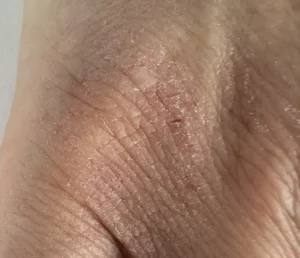
You’re brushing something off your black sweater before a meeting. Flakes. Again. The moisturizer you’ve used for years stopped working sometime around your 47th birthday, and now your skin feels like it belongs to someone else entirely—tight by 10 a.m., reactive to products it once tolerated, rougher in ways you notice when you touch your face.
This isn’t your imagination. Ceramide levels in skin drop by 30–50% between ages 30 and 70, with the steepest decline occurring during perimenopause and menopause. The lipid composition shifts too: shorter ceramide chains replace longer ones, fundamentally changing how your barrier holds itself together.
Walk down any skincare aisle and you’ll find products claiming to “repair barriers.” But how many are designed around the specific biochemistry of menopausal skin? How many rely on published dermatological research rather than marketing trends?
I couldn’t stop wondering: what does real, evidence-driven barrier repair look like when you build it yourself and track the results?
Over the next eight weeks, I’m designing, documenting, and testing a barrier-repair cream on my own skin—grounding every decision in published research, measuring changes week by week, and sharing what actually happens. Not theory. Practice.
The Hypothesis
Here’s my prediction, based on clinical literature:
A topical cream containing a ceramide – dominant lipid blend in the clinically validated 3:1:1 ratio (ceramides : cholesterol : fatty acids), combined with multi-molecular weight hyaluronic acid, delivered through a lamellar gel network emulsion at pH 4.5 – 5.5, will measurably improve barrier function over eight weeks.
But “improved barrier function” is clinical language. In daily life, it translates to:
- Comfort that lasts. Skin that feels genuinely good throughout the day, without that persistent tightness that makes you reach for moisturizer by noon.
- Reduced reactivity. No more burning from products your skin previously tolerated. No more itching after temperature changes.
- Smoother texture. The roughness that appeared over the past few years smooths out. Visible flaking disappears.
- Resilience. Skin that handles normal environmental stressors — wind, indoor heating, a glass of wine —without compromising.
This is ambitious. But multiple research teams have published studies demonstrating these outcomes are achievable when ceramides, cholesterol, and fatty acids are combined in this precise ratio and delivered effectively.
Formulation Goals vs. Ingredient Choices: A Distinction That Matters
Most skincare articles blend two different things together: what a formula must achieve and which ingredients were chosen to achieve it. Separating these helps you evaluate any barrier-repair product you encounter — whether something you’re considering buying or a formula you’re building yourself.
A formula can have excellent goals but miss the delivery mechanism. It can list perfect ingredients on paper but fail in practice due to pH problems, stability issues, or compatibility errors.
What This Formula Must Achieve
1. Multiple Ceramide Types (NP, AP, EOP)
Menopausal skin experiences two simultaneous problems: total ceramide levels drop, AND the chain length of remaining ceramides shifts shorter. Think of ceramides like bricks in a wall. You’re not just losing bricks — the replacement bricks are smaller, leaving bigger gaps.
A formula needs multiple ceramide types at concentrations high enough to address both the quantity drop and the quality change. You’re restoring a specific lipid profile, not just adding a ceramide ingredient.
2. The 3:1:1 Lipid Ratio
This specific ratio — three parts ceramides to one part cholesterol to one part fatty acids — appears repeatedly in the highest-quality research comparing different lipid combinations. Studies consistently show it outperforms equal-amount blends in accelerating barrier recovery in aged and disrupted skin.
Why does this ratio work better than others? It mimics the natural lipid composition of healthy stratum corneum. The ratio isn’t arbitrary — it’s biomimetic.
3. Multi-Level Hydration
Hydration isn’t one-dimensional. Different molecular weights of hyaluronic acid work at different depths:
- High-molecular weight hyaluronic acid (high-MW HA) stays on the skin surface, creating a protective film that reduces water loss. Low-molecular weight hyaluronic acid (low-MW HA ) penetrates deeper, supporting cellular hydration signaling.
- A garden hose analogy: high-MW HA is like a sprinkler wetting the surface, while low-MW HA is like drip irrigation reaching deeper roots. Both matter for different reasons.
4. Skin Tolerance
Menopausal skin is already reactive. Fragrance-free isn’t a marketing claim here — it’s a functional requirement. Every ingredient must serve a purpose; nothing is included because it smells pleasant or sounds appealing.
5. pH Optimization (4.5–5.5)
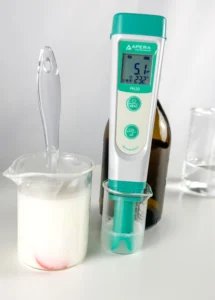
Your skin naturally maintains an acidic pH in this range, called the acid mantle. This matters for two reasons:
First, enzymes that synthesize new ceramides require acidic conditions to function. A neutral or alkaline formula undermines your skin’s own barrier-building machinery.
Second, the acid mantle itself serves as a first line of defense. Formulas that disrupt this pH compromise the very barrier they claim to repair.
6. Lamellar Delivery Architecture
Standard emulsions mix oil and water into droplets — imagine tiny oil marbles suspended in water. Functional, but not optimal for barrier repair.
Lamellar gel networks work differently. They organize lipids into stacked, sheet-like layers that mirror how ceramides and lipids naturally arrange themselves in healthy skin. The structure looks like pages in a book rather than marbles in a jar.
Why does this architecture matter? Three reasons:
- Better integration. Ceramides encounter a structure that resembles skin’s own lipid organization, improving how they incorporate into the barrier rather than sitting on top of it.
- Improved delivery. Published studies show lamellar systems significantly increase the bioavailability of barrier-repair actives compared to conventional emulsions.
- Extended moisture retention. Multi-layer structures create moisture reservoirs within the formulation, providing hydration that lasts hours rather than minutes.
The tradeoff: lamellar gels require precise formulation — specific emulsifiers, exact water-to-oil ratios, careful pH management. They’re technically demanding. But the efficacy difference justifies the complexity.
The Ingredients I Selected
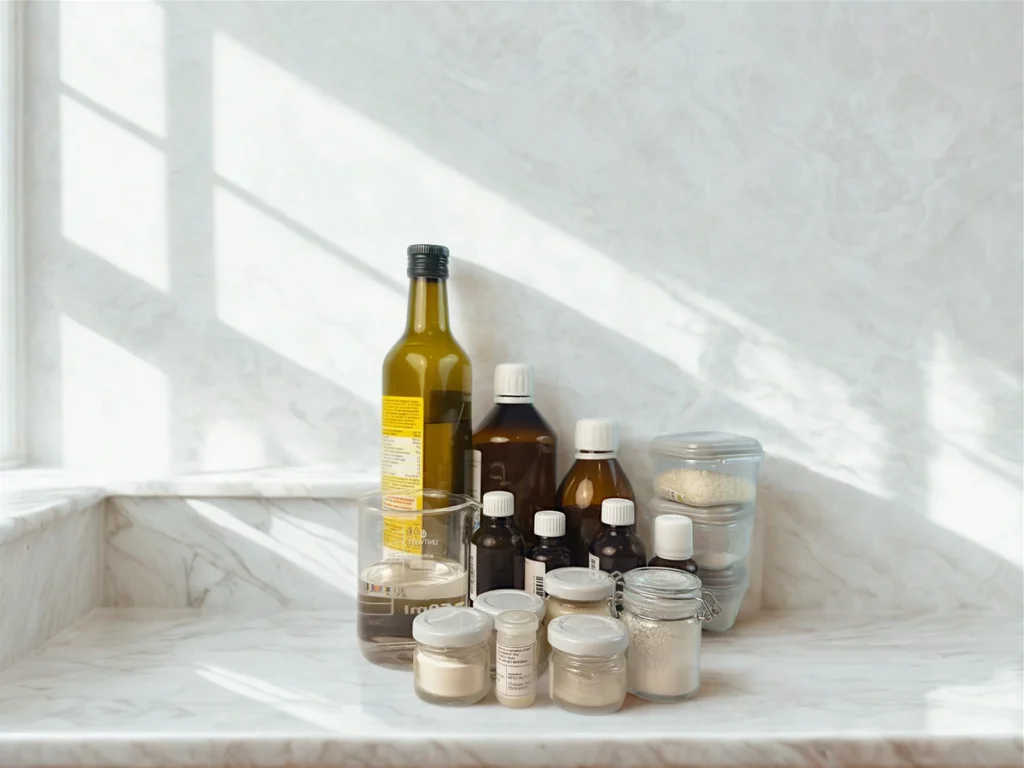
Ceramide Complex ( NP, AP, EOP)
I chose a professionally manufactured ceramide complex rather than sourcing individual ceramides separately. Pre-formulated complexes combine the target ceramide types with cholesterol in ratios optimized for stratum corneum integration — something that’s difficult to replicate accurately when weighing raw ceramides at small batch scales.
This matters because ceramide efficacy depends on delivery mechanism, not just presence on an ingredient list. A ceramide compound sitting on your skin isn’t useful if it can’t integrate into barrier structure.
Fatty Acids: Two Strategic Sources
Caprylic/ Capric Triglyceride (MCT): Medium-chain fatty acids that contribute to barrier lipid composition while maintaining emulsion stability and a non-greasy skin feel.
Sunflower Seed Oil: Rich in linoleic acid, which activates PPAR pathways — a mechanism for reducing skin inflammation at the cellular level. Menopausal skin often experiences baseline inflammation alongside barrier compromise, making anti-inflammatory action particularly relevant.
Using two fatty acid sources ensures both lipid diversity and functional coverage.
Multi-Molecular Weight Hyaluronic Acid
A true multi-MW blend addresses both surface barrier recovery and deeper hydration — the two-level approach research validates.
Supporting Ingredients
- Shea Butter: Additional barrier-supportive lipids and natural emollients complementing the ceramide complex.
- Squalane: A biomimetic emollient closely matching skin’s natural sebum composition, improving penetration and feel.
- Pentylene Glycol + Glycerin: Dual-humectant system ensuring hydration at multiple levels.
- Vitamin E (Tocopheryl Acetate): Antioxidant protection against oxidative stress that can compromise barrier repair.
The Complete Formula (INCI List)
Aqua, Caprylic/Capric Triglyceride, Helianthus Annuus Seed Oil, Butyrospermum Parkii Butter, Squalane, Glycerin, Cetearyl Alcohol, Pentylene Glycol, Cetearyl Glucoside, Sodium Lauroyl Lactylate, Sodium Stearoyl Glutamate, Sodium Levulinate, Tocopheryl Acetate, Glyceryl Caprylate, Sodium Hyaluronate, Xanthan Gum, Sodium Anisate, Citric Acid, Ceramide NP, Phenoxyethanol, Phytosphingosine, Ceramide AP, Cholesterol, Carbomer, Ethylhexylglycerin, Ceramide EOP
A Transparency Note on Concentration
Here’s where honesty requires acknowledging a potential limitation.
Clinical research suggests 0.2–2% actual ceramide concentration for meaningful barrier repair. One landmark study showed statistically significant improvements using 0.5% ceramide compared to controls.
This formula contains approximately 0.105–0.15% actual ceramides—below the lower end of the validated range.
Why did I make this choice? The supplier’s technical documentation recommends 3–5% of the ceramide complex for typical aging skin applications, while 5–15% is designated for intensive repair. Clinical testing focused on the 5% concentration. Evidence also suggests diminishing returns above 5% — more ceramide may not integrate effectively beyond a saturation threshold.
This creates an interesting experimental opportunity. By using a lower-than-literature-recommended concentration while maintaining stable lamellar delivery architecture, this eight-week test can help reveal whether industry concentration recommendations reflect true efficacy limits or formulation convenience.
If barrier repair is evident with ceramides positioned lower on the INCI list, it suggests delivery architecture may matter more than raw percentage — valuable information for evaluating any commercial barrier-repair product.
I’m genuinely curious whether this formula will work. That uncertainty is the whole point of conducting an experiment rather than making assumptions.
The Limitations I’m Acknowledging
Study Design Constraints
Single participant. My results reflect one person’s skin characteristics—not generalizable to all menopausal skin. Your barrier repair might look different based on your unique skin microbiome, genetic factors, and hormonal status.
Non-commercial product. This formula hasn’t undergone clinical testing, safety assessments, or regulatory approval. It’s a personal experiment, not a validated product.
Home laboratory conditions. My mixing conditions, temperature control, and storage differ from commercial manufacturing standards, potentially affecting formula stability.
Variables I Can’t Control
Environmental factors (seasonal changes, humidity fluctuations), personal variables (stress, sleep, hormonal shifts), and behavioral changes all influence skin barrier recovery independently of any formula.
Mitigating Expectation Bias
All measurements derive from self-evaluation: Visual Analog Scale ratings (0–10 for comfort, dryness, sensitivity), standardized photography (same lighting, angles, time of day), and written observations.
When you create something hoping it will work, objectivity becomes difficult. My mitigation strategy: structured assessment tools reduce subjective drift, standardized photography creates a visual record I can’t rationalize away, and I’m committing publicly to documenting setbacks with the same transparency as wins.
How I’m Tracking Progress
Weekly documentation includes:
- Self-assessment scores for comfort, hydration, sensitivity, and texture
- Standardized photographs creating a visual timeline
- Written observations capturing day-to-day changes and responses to environmental stressors
I’ll publish progress biweekly—encouraging results and disappointments. No cherry-picking.
More From This Series
This is Part 1 of a four-part series:
- Part 2 (Weeks 1–3): Initial application, texture, absorption, and immediate comfort response
- Part 3 (Weeks 4–6): Sensitivity changes, visual texture improvement, and first photographic evidence
- Part 4 (Week 8): Final barrier function assessment, long-term resilience, and overall conclusions
Each article will include week-by-week observations, photographic evidence, honest assessment of what worked and what didn’t, and practical insights you can apply when choosing barrier-repair products for your own skin.
The larger goal extends beyond one person’s eight-week experiment. It’s demonstrating what evidence-driven formulation looks like in practice, clarifying realistic expectations for barrier repair timelines, and building the knowledge to evaluate whether barrier-repair products are formulated with genuine understanding or just following industry trends.
Your Role
You’re not just reading about my results. You’re seeing the reasoning behind each decision, the compromises required by real-world constraints, and the transparency.
By Week 8, you’ll understand what makes a barrier-repair formula effective, why certain ingredient concentrations matter, how to read a formula and predict whether it’s likely to work, and what realistic timelines for barrier repair actually look like.
That knowledge becomes your advantage when evaluating any product for your own menopausal skin.
Let’s begin.
Frequently Asked Questions
Questions that come up most often about barrier-repair formulation:
What is the 3:1:1 ceramide ratio in skincare?
The 3:1:1 ratio refers to three parts ceramides, one part cholesterol, and one part fatty acids. Research shows this specific combination mimics the natural lipid composition of healthy skin and outperforms equal-ratio blends in accelerating barrier recovery — particularly in aged or hormonally disrupted skin.
Why does pH matter in barrier-repair skincare?
Skin’s natural pH sits between 4.5 and 5.5. Enzymes that synthesize new ceramides require these acidic conditions to function. A cream formulated at neutral or alkaline pH undermines the skin’s own barrier-building processes — effectively working against the repair it claims to deliver.
Why do ceramide levels drop during menopause?
Ceramide concentrations in skin decline by 30–50% between ages 30 and 70, with the steepest drop occurring during perimenopause and menopause. The remaining ceramides also shift toward shorter chain lengths, leaving larger gaps in the barrier structure — which is why skin becomes drier, more reactive, and less resilient during this transition.

Researched and written for MEHAUTIQ by Dorota Weiss
Cosmetic formulator trained at Formula Botanica (Advanced Diploma in Organic Cosmetic Science), with an academic research background. Every article is built on peer-reviewed studies read at source, and says plainly where the evidence ends.